

 By Admin |
 November 19, 2026
EDI (Electrodeionization) units are commonly used in sectors where the need for very pure water is prevalent. Examples include the production of pharmaceuticals, laboratory research, power stations and many other industries. The process works by combining ion exchange with the use of electric currents to eliminate ionic impurities from reverse osmosis water.
However, a perfectly engineered EDI unit might encounter operational problems for various reasons. The understanding of the causes of such problems would enable one to operate the water purification equipment more efficiently.
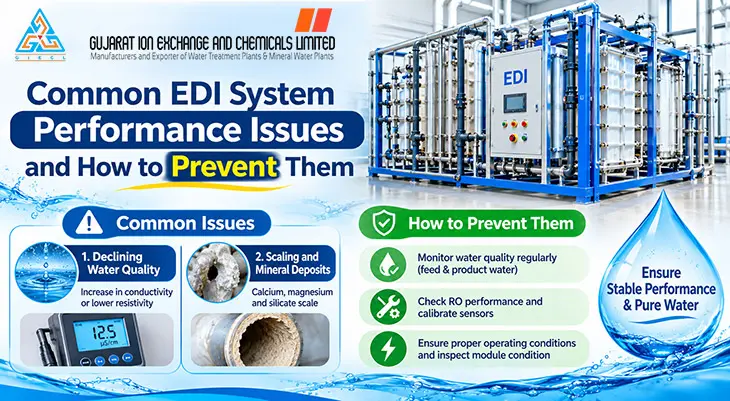
One of the most common signs of EDI system trouble is an increase in product water conductivity or a reduction in resistivity. This may indicate that the system is struggling to remove dissolved ions effectively.
Poor RO performance, excessive dissolved carbon dioxide, membrane fouling, and unsuitable operating conditions can contribute to this problem. Faulty conductivity sensors may also produce misleading readings.
How to prevent it: Monitor feedwater and product water quality regularly. Check the RO system before investigating the EDI unit itself, and calibrate conductivity instruments according to the maintenance schedule. If readings remain outside the required limits, investigate the electrical supply and module condition.
Scale formation happens due to the deposition of calcium, magnesium, and silicates in the EDI module. Scaling causes problems like restricted water flow, ion rejection, and reduced efficiency.
Usually, scale formation happens because of insufficient removal of hardness and silica from the feed water. Sometimes, changes in feedwater parameters also increase the possibility of scale formation in the system.
To avoid it: Make sure that RO and pre-treatment are working within their design parameters. Also, test your feedwater for hardness and silica content. Check the filtration system and look for any abrupt changes in water parameters.
These components may get deposited inside the module and hinder ion transport within the module during the water treatment process. This problem might cause inconsistencies in product water quality, pressure difference, and reduced output.
Inefficient pretreatment is often the main cause of such a problem. Units that have been left idle for long may require extra attention before they can be put back into service.
How to prevent it: Maintain appropriate pretreatment and replace filters when required. Follow the manufacturer's flushing, sanitisation, and cleaning instructions. An Electro deionization Module should operate with feedwater that meets its specified quality requirements, helping reduce the risk of premature fouling and unnecessary maintenance.
The EDI system depends on the control of DC power source to facilitate ion migration and continual regeneration of the ion exchange media. Any electrical faults, wrong setting up of the system, and irregular current may impact the performance of the system to ensure that water produced meets the purity requirements.
Low current could be indicative of a problem with the power supply, electrical connection problems or fouling. High current could mean variation in feedwater parameters and working of the system beyond specifications.
How to prevent it: Check voltage and current as part of inspection activities. Compare voltage and current values against normal operating values of the system and attend to any alarms immediately.
The functioning of the EDI unit is affected by a steady water flow in the product and concentrate streams. Clogged filters, valve blockage, pump failure, or pipeline restriction can lead to flow pattern disturbance. Concentrate flow can be low, which would promote ion deposition and scaling formation.
Pressure fluctuations, inconsistent flow rate, or changes in water quality can be observed.
Prevention: Conduct regular inspection of flow meters, valves, pumps, and pipelines. Compare actual values of the flow and pressure with the maximum permissible values according to the specifications of the manufacturer. Check the reasons for pressure discrepancies instead of making continuous valve adjustment.
Even when the EDI is functioning effectively, lack of regular inspection can cause small problems that eventually turn into larger problems. The worn parts, sensor errors, leakages and inadequate pretreatment systems can have effects on the general reliability of the system.
Having a regular maintenance plan makes it possible for the operator to detect any change before it becomes problematic.
How to prevent it: Maintain records of conductivity, resistivity, flow, pressure, voltage, and current. Schedule filter replacements, instrument calibration, and equipment inspections according to operating conditions and manufacturer recommendations. If performance continues to decline despite routine checks, consult a qualified service provider.
The prevention of any performance issues begins with gaining knowledge about the whole water treatment process. EDI modules require appropriate quality of the feed water, stable operation, and proper maintenance of upstream systems.
In choosing Electro deionization Module, one must pay attention to such factors as the necessary purity of water, its quality, capacity of production, and compatibility with the existing RO plant.
Baseline measurements should be taken by the operators as well during the commissioning process. Comparison of the present-day measurement values with the baseline measurements will make it easier to detect any gradual changes, determine their cause, and plan maintenance.
The consistent performance of EDI depends on the purity of the feedwater, the right electrical parameters, proper flow rate, and regular maintenance. Dealing with the early symptoms can help prevent downtime and keep the water clean.
At GIECL, you can receive help with water purification in industry. Contact GIECL to learn about your options in water treatment and find the best system for your company. The right Electro deionization Module and maintenance can ensure reliable performance.
Common causes include poor feedwater quality, scaling, fouling, electrical faults, and irregular water flow.
Monitor water quality, maintain pretreatment equipment, check operating parameters, and follow the manufacturer's maintenance schedule.
Yes. Routine inspection, calibration of instruments, filter change, and cleaning based on conditions aid in maintaining its performance.

309, Sarthik Square , TGB service
road, Near Info Tower,
S. G. Highway, Bodakdev,
Ahmedabad-380 054, Gujarat, India


© Copyright 1996 - Gujarat Ion Exchange And Chemicals Limited. All Rights Reserved
Powered By: #1 Vinayak InfoSoft - SEO Company Ahmedabad

 Ahmedabad, Gujarat
 +91 92281
90646
 sales@giecl.com

