

 By Admin |
 October 22, 2026
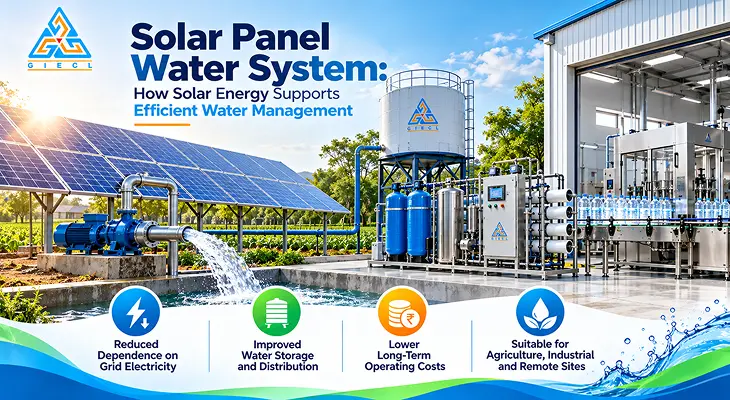
Water management is very significant in agriculture, industrial operations and daily life. A reliable source of energy is required for pumping, treating and distributing water. The high cost of electricity or unreliable electricity supplies can make solar power an alternative to other options for water systems in some areas. In this way, businesses can facilitate water applications and lessen the reliance on traditional electric power by utilizing energy from sunlight.
A solar panel water system utilizes electrical power that is produced by solar panels to drive the water pump, among other compatible devices. This kind of system is based on various factors such as the type of water, application, and the volume of the water needed.
Solar panels convert sunlight into electricity. This electricity will be used in pumps made to work with other pumps that take water from wells, storage tanks or other sources. In some system designs, solar energy may also be used to assist some water treatment and distribution operations.
For instance, a solar-powered pumping system can pump water into a storage tank during daylight hours. Then the stored water will be ready to use as needed, and the pump will not be allowed to run at all times. This can be helpful in agricultural fields, remote fields or sites where frequent power supply is a problem.
The system, however, must be designed based on real demands of water. Its performance depends on the capacity of solar panels, the water pumping needs and the amount of sunlight available.
Compatible water equipment can operate using electricity generated from sunlight. This may be useful in areas where power failures have an impact on pump schedules. The electricity saved from the grid will vary depending on the size of the system, the amount of sunlight and the daily amount of water used.
With the right storage tanks, the planned water supply can be assured using solar-powered pumps. The water can be pumped when the sun shines and used when needed. This can make it easier to manage water in places where electricity is not always available.
Solar systems utilise the sun as a power source and can lower your electricity bills. However, the initial installation cost, equipment maintenance, pump efficiency and any backup power requirements should be considered before making a decision.
Solar-powered pumping can be used in areas of agriculture and rural facilities and sites where a reliable electricity supply is not available. The design can be based on the water source and water demand per day.
A number of water management activities can be supported by solar energy. It can be used in agriculture for pumping water for irrigation from fields. Water transfer to an overhead storage tank can be accomplished using a solar system in residential and commercial building applications. Other uses of solar power for a small part of the pumping and water distribution systems may be considered at industrial facilities.
Energy planning is also a vital process for businesses engaged in water processing and packaging. An Solar Panel Water System includes water treatment equipment, water filling equipment, capping and packing equipment. Solar energy could be used to help meet the plant's electrical load and operating schedule but needs a proper plant assessment before determining an appropriate solar installation.
Before installing a solar-powered water system, consider the following points:
In industrial applications, GIECL recommends careful planning of the installation, as production machinery and water treatment equipment may require a steady power supply.
Solar energy can be used as a viable alternative to support water extraction, storage and distribution. When properly planned, a Solar Panel Water System can help businesses reduce their dependence on grid electricity and manage water-related operations more effectively.
GIECL offers water treatment solutions and turnkey mineral water bottling projects as per the various operational requirements. Businesses considering solar energy for water processing should assess their water requirements, equipment load and available energy supply before selecting a suitable setup. A well-designed system can be used to help integrate the water management needs with long-term operating requirements.
A solar panel water system uses solar energy to provide power to water pumps and equipment that can use it.
It may help reduce electricity consumption from the grid, aid in storing water, and also help in controlling operational costs.
Yes, it is possible, but it depends on the plant’s electricity requirement and design.

309, Sarthik Square , TGB service
road, Near Info Tower,
S. G. Highway, Bodakdev,
Ahmedabad-380 054, Gujarat, India


© Copyright 1996 - Gujarat Ion Exchange And Chemicals Limited. All Rights Reserved
Powered By: #1 Vinayak InfoSoft - SEO Company Ahmedabad

 Ahmedabad, Gujarat
 +91 92281
90646
 sales@giecl.com

